The wiring in most UK homes has a lifespan of around 25–40 years, depending on the installation quality and how the property has been used. If your home was built or last rewired before the late 1990s, it's likely worth having the electrics assessed. Here are the signs we most commonly see in properties that need attention.
1. You still have a fuse box with rewirable fuses
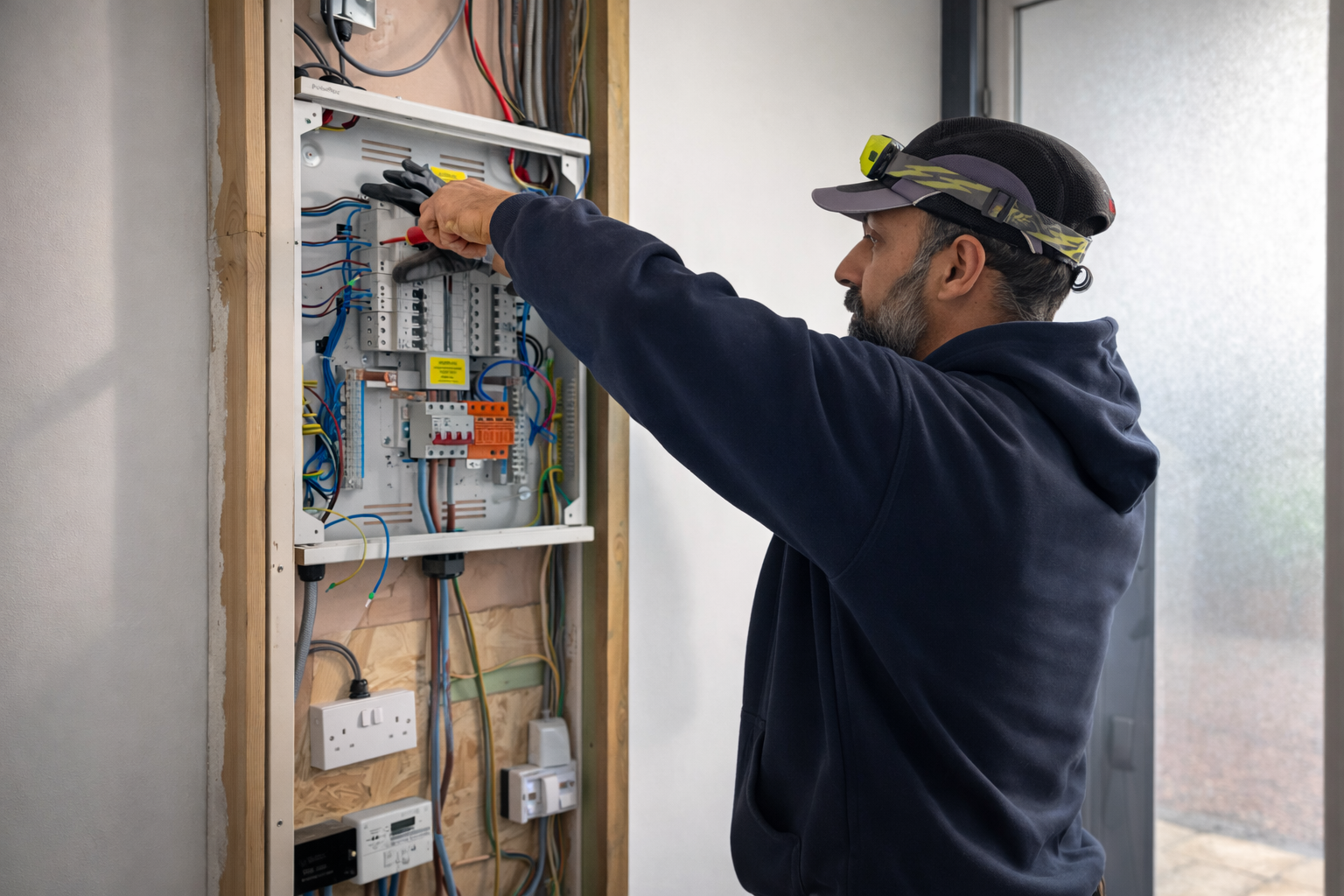
If your consumer unit (fuse box) uses old-style ceramic fuse holders with wire that needs replacing when a circuit trips, it almost certainly needs replacing. Modern consumer units use circuit breakers and RCDs — devices that respond far faster to faults and dramatically reduce the risk of shock and fire.
2. Sockets or switches are discoloured or warm to the touch
Yellowing, scorch marks, or warmth around a socket or switch is a warning sign that shouldn't be ignored. It can indicate a loose connection, overloaded circuit, or deteriorating wiring — all of which carry a genuine fire risk.
3. Circuits trip regularly for no clear reason
A circuit breaker that trips occasionally is doing its job. But if you're regularly resetting breakers without overloading the circuit, it may indicate wiring that's become damaged, degraded, or is undersized for your current usage.
4. You have round-pin sockets or single-piece sockets
Round-pin sockets indicate wiring from before the 1960s. Single-piece sockets (where the socket plate and back box are one piece) are also a sign of older installations. Both suggest the wiring is likely decades old and due for inspection.
5. Lights flicker or dim unexpectedly
Occasional flickering when a high-draw appliance starts up (like a fridge compressor) is normal. But regular or widespread flickering suggests a loose connection or wiring issue that needs investigating.
6. You've had an extension built without electrical sign-off
Extensions built before 2005 often weren't subject to the same electrical regulations as today. If your extension's wiring has never been certified, it's worth having it assessed — particularly if you're planning to sell.
7. You're planning a major renovation
If you're opening up walls, adding a kitchen or bathroom, or significantly extending your home, it's an ideal time to assess and upgrade the wiring before everything is covered up again. Doing it at this stage is far cheaper and easier than retrofitting later.
What should you do?
If any of the above sounds familiar, the first step is an EICR inspection to properly assess the installation. From there, we'll give you an honest assessment — full rewire if necessary, partial upgrades if that's all that's needed, or simply a clean bill of health if the wiring is in good shape.