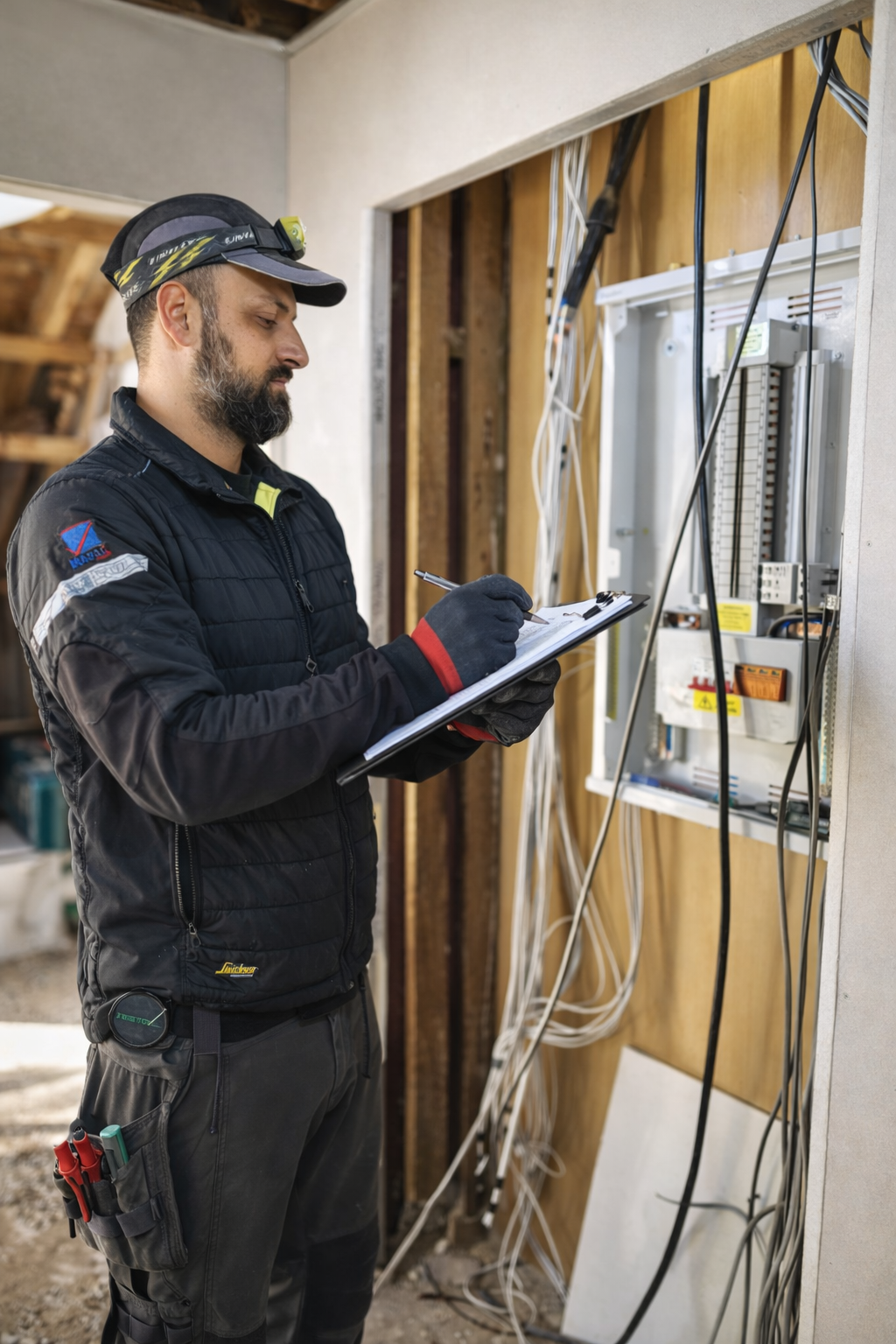
An EICR — Electrical Installation Condition Report — is a formal assessment of the electrical installations in a property. An approved electrician inspects the wiring, consumer unit, sockets, light fittings, and other fixed electrical elements, then issues a report grading the condition of the installation.
Who needs an EICR?
Since 2020, private landlords in England are legally required to have an EICR carried out at least every five years, or at the start of a new tenancy. Failure to comply can result in significant fines — up to £30,000 in serious cases.
For homeowners, an EICR isn't a legal requirement — but it is very strongly recommended, particularly if you've bought an older property, haven't had the electrics checked in over ten years, or are planning renovation work.
What does the electrician actually look at?
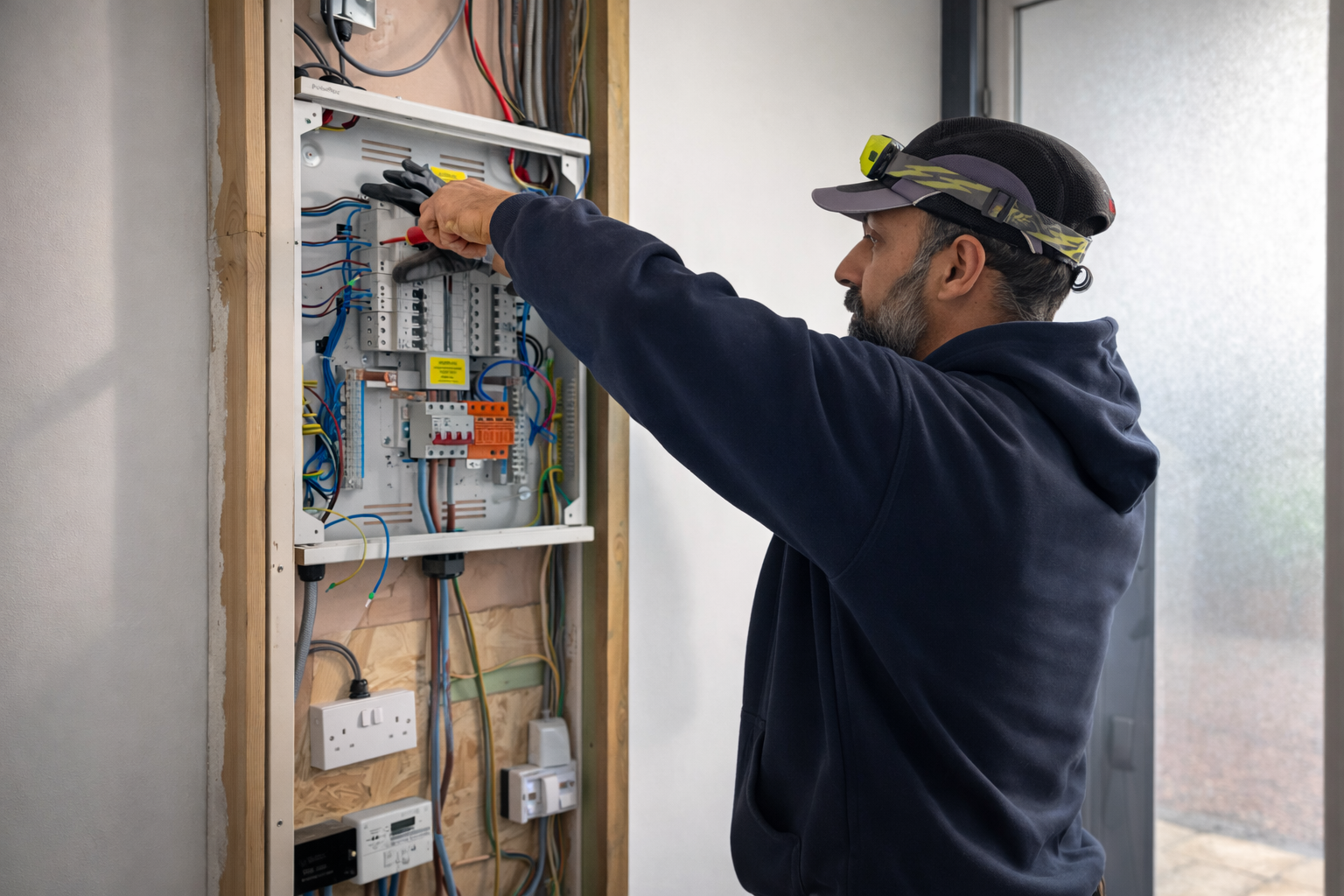
The inspection covers all fixed electrical installations — that's everything from the meter and consumer unit through to the wiring running through your walls and the sockets, switches, and light fittings they connect to. The inspector will check for:
- Signs of deterioration, damage, or overheating
- Earthing and bonding arrangements
- Circuit protection — correct fuses and RCDs
- Whether the installation meets current safety standards
- Any potential shock or fire hazards
What do the report grades mean?
The EICR uses a coded system to classify any issues found:
- C1 (Danger present): Immediate remedial action required — genuine risk of injury.
- C2 (Potentially dangerous): Urgent remedial action recommended.
- C3 (Improvement recommended): Not dangerous, but not meeting current best practice. Doesn't cause a failure.
- FI (Further investigation required): Something needs looking into more closely before a full assessment can be made.
A C1 or C2 code means the installation is deemed "Unsatisfactory" — which means it fails. The remedial work must be completed (and documented) before the landlord can legally let the property.
How long does an EICR take?
For a typical 3-bedroom house, an EICR inspection takes around 3–4 hours. Larger or older properties can take longer. We carry out all inspections with minimal disruption — we'll let you know in advance if there's any point where the power needs to be briefly isolated.
What happens after the report?
You'll receive a clear, detailed report — usually the same day — listing any observations and their codes. If remedial work is needed, we'll provide a separate quote and can typically carry out the work at the same visit or shortly after.
Landlords in particular appreciate the fact that we handle the paperwork from start to finish, including providing the signed certificate ready to hand to tenants and councils.